
Mailshake vs Reachingly Comparison: Best Cold Email Marketing Platform For 2026
You want more replies, not more busywork. Mailshake and Reachingly.ai both help you run outbound campaigns, manage follow ups, and keep your pipeline moving.
But they take different routes.
Mailshake leans into a polished sales engagement workflow with built-in analytics, testing, and optional multichannel outreach.
Reachingly.ai focuses on AI-assisted sending, deliverability support, and a simpler cost of entry.
If you are choosing a tool that your team will live in every day, the small details matter.
This guide compares what each platform actually offers, and how those capabilities affect your results.
A Comprehensive Mailshake Vs Reachingly Comparison Table
| Features | Mailshake | Reachingly.ai | Winner |
| AI-Powered Personalization & Advanced Analytics | Personalization fields, template management, A/B testing, and AI copy help. Solid campaign analytics and performance tracking. | AI driven personalization designed to speed up tailored messaging, plus advanced analytics that help you understand performance with clarity. | Reachingly.ai |
| Team Collaboration | Multi user setups, shared workflows, and admin friendly organization on team plans. | Built for collaboration with shared resources and coordinated outreach workflows. | Both Tools |
| Customer Support | Improved, but slow to respond. Can take 24 hours sometimes | Fast to respond and quick resolution | Reachingly.ai |
| Pricing Plans – Starting Plan Billed Annually (Affordability) | Starter is about $29.25 per user per month when billed annually (about $351 per year). | Public listings commonly show starting pricing around $29 per month, and your annual entry point is typically easier to fit into lean budgets. | Reachingly.ai |
| Email Warm-up & Deliverability | Built in warmup and verification, plus rotation and throttling controls on higher tiers. | Strong deliverability focus with warmup and inbox placement oriented workflow designed for consistent sending. | Reachingly.ai |
Importance of Choosing The Best Cold Email Outreach Tool For Your Business
Choosing the right platform changes how fast you launch, how safe you send, and how clearly you improve.
When your sequences, inboxes, and replies grow, the wrong tool creates friction.
The right tool removes it.
Here are the most important outcomes you should protect.
- Protect deliverability and reputation
- Improve reply rates faster
- Keep data clean always
- Reduce manual follow ups
- Standardize team messaging quality
- Track performance with clarity
- Control sending and pacing
- Measure what actually converts
Mailshake Vs Reachingly: The Best Cold Email Outreach Tool
Mailshake and Reachingly.ai both help you send sequences, follow up automatically, and keep outreach organized.
So your decision should come down to how each tool helps you do three things.
- First, write messages that sound personal at scale.
- Second, protect deliverability so your emails actually land.
- Third, improve performance with reporting you can act on.
Mailshake is known for a structured outreach flow, with A/B testing, scheduling controls, and a clear move into sales engagement with options like a dialer and LinkedIn automation on higher tiers.
Reachingly.ai is built around AI-driven messaging support, deliverability tooling, and straightforward campaign management, with an emphasis on value for money.
If you want a tool that feels like a complete sales cockpit, Mailshake makes sense.
If you want a tool that prioritizes affordable scale and quick execution, Reachingly.ai can be the smarter fit.
1. Personalization
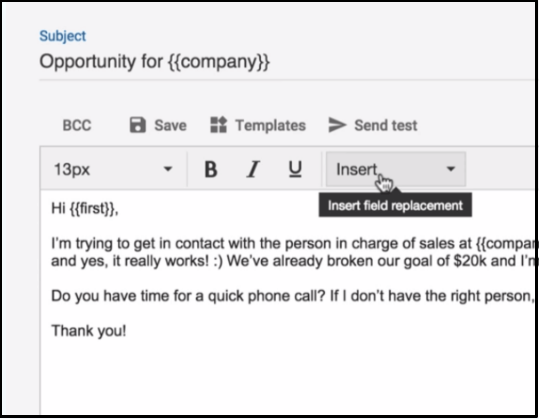
Mailshake gives you practical personalization controls that work well for teams.
You can build sequences with dynamic fields, vary copy across messages, and manage templates so your outreach stays consistent.
On plans that include template management and the unified inbox, you get a cleaner workflow for iterating on messaging without losing track of replies.
Mailshake also includes SHAKEspeare AI, which can help you draft email copy faster when you are building new campaigns.
If you care about structured experimentation, Mailshake’s A/B testing supports a simple approach to personalization.
You can test subject lines or message variants, then keep what wins.
Reachingly.ai leans harder into AI-assisted personalization.
It is positioned to help you generate copy, create variations using spintax-style approaches, and reduce the “same email everywhere” footprint that hurts response rates.
It also pairs personalization with deliverability awareness, like spam risk checks and list verification, so the message you personalize is more likely to reach the inbox.
If you run high-volume outreach, this combination matters.
Personalization only pays off when the email lands and the copy reads naturally.
Reachingly.ai aims to keep that loop tight, from writing to sending to performance review.
Final verdict:
If you want structured personalization with testing and a mature workflow, Mailshake is strong.
If you want AI-assisted variation and a personalization flow that stays close to deliverability, Reachingly.ai is compelling.
Both tools can help you personalize at scale.
Both can produce replies when your list and offer are right.
Winner: Both tools.
2: Pricing Plans
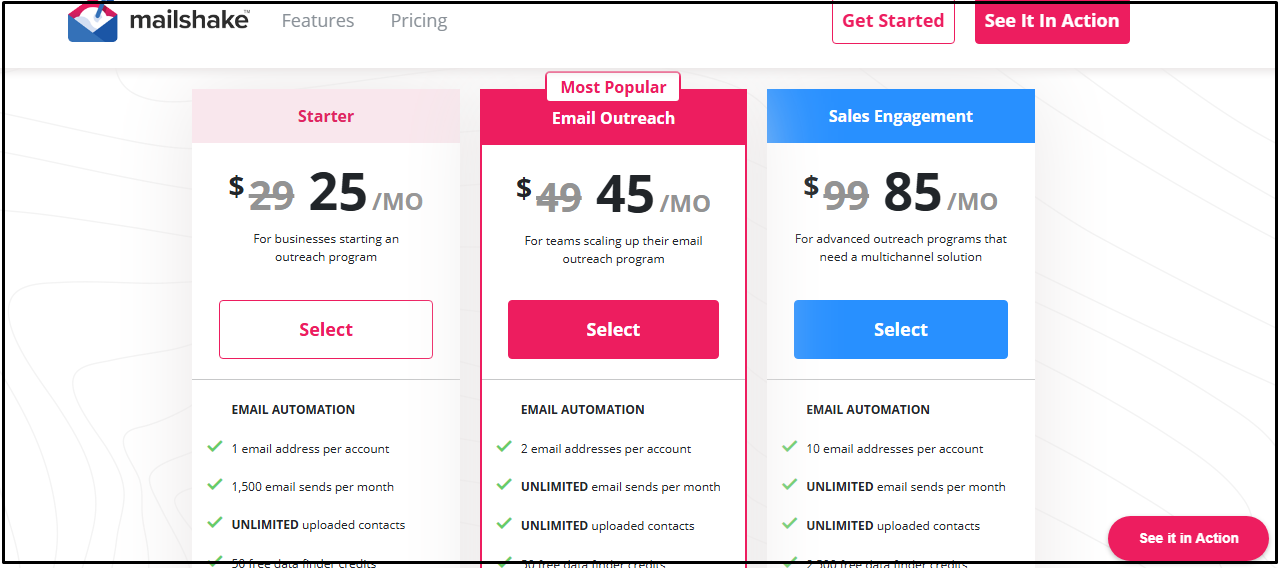
Mailshake’s pricing is clear and tiered.
Its Starter plan is $29 per month, or about $25 per month when billed annually.
Starter includes one email address per account, a monthly send allowance, and core outreach capabilities like campaigns and warmup and verification features.
If you want unlimited sending and more operational controls, Email Outreach is $49 per month, or about $45 per month billed annually.
Sales Engagement is $99 per month, or about $85 per month billed annually.
That tier adds a larger account setup plus features aimed at teams doing more than email, such as a dialer, LinkedIn automation, custom tasks, and higher included credits for its lead-finding module.
Reachingly.ai is generally positioned as a lower-cost alternative.
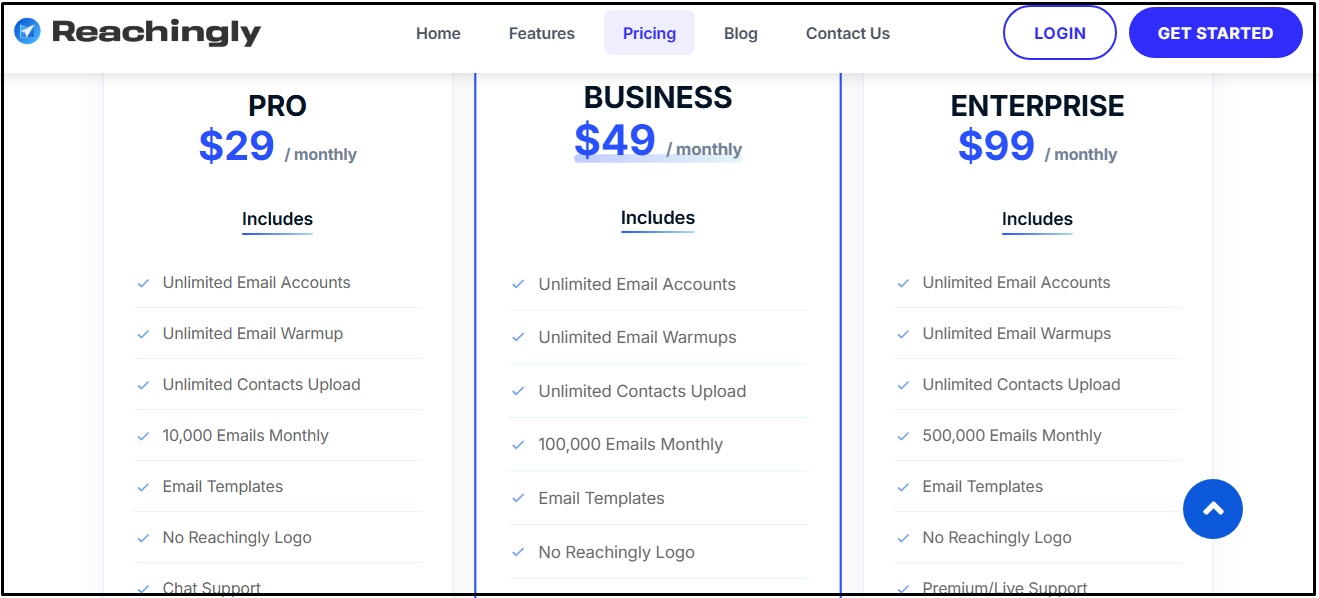
Public plan listings commonly show Reachingly.ai starting around $29 per month, with a free trial option.
Because pricing can change, you should confirm the exact billing details inside Reachingly.ai before you commit.
Still, the main takeaway is simple.
Mailshake’s entry price is lower, and the cost rises as you add sales engagement features.
Reachingly.ai is designed to keep your starting spend lower while still covering outreach essentials like sequences, AI writing support, and deliverability tools.
Final Verdict:
Mailshake is priced like a premium sales workflow.
You pay more, and you get a broader platform feel as you move up tiers.
Reachingly.ai is the more budget-friendly starting point.
If you are an agency, a lean startup, or a growing business that needs scale without a high monthly baseline, Reachingly.ai is the smarter buy.
Winner: Reachingly
3: Advanced Analytics
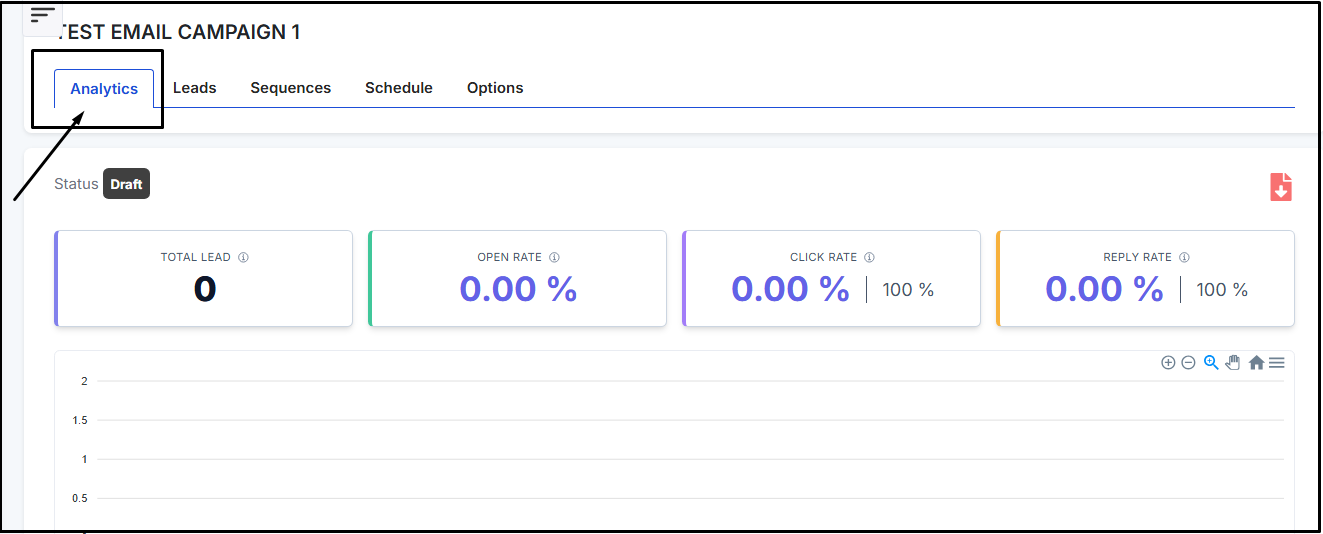
Mailshake gives you reporting that helps you run outreach like a system.
You can track campaign performance, monitor engagement, and review A/B test results to see which version earns more opens and replies.
On higher tiers, Mailshake adds sales engagement signals, like lead temperature and account-level views, so you can prioritize the right conversations.
This helps when your inbox is full and you need to focus.
Mailshake also supports workflow visibility across campaigns, templates, and prospects, so you spend less time guessing why a sequence is underperforming.
Reachingly.ai positions analytics as part of a tighter optimize-and-send loop.
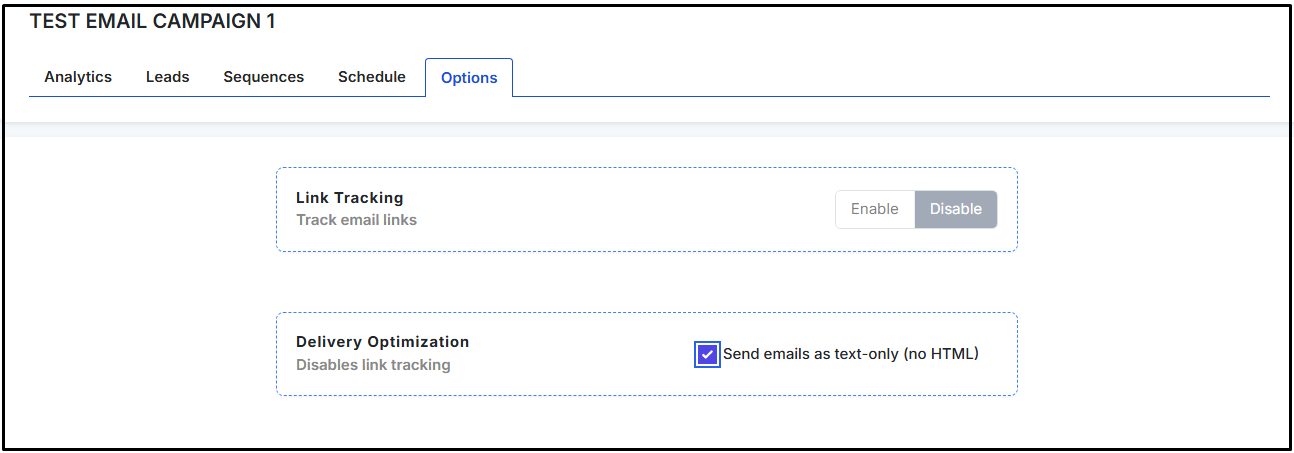
Instead of only showing engagement stats, it emphasizes analytics that connect with deliverability and message quality.
Spam risk checks and verification are not “analytics” in the classic dashboard sense, but they act like analytics because they highlight where performance will break before you hit send.
That is valuable when you run multiple inboxes, multiple client campaigns, or rapid iterations.
Reachingly.ai is built to help you spot issues early, adjust copy and variations, and keep outreach stable as volume increases.
For many teams, that is what “advanced” really means.
You improve outcomes, not just charts.
Final Verdict:
Mailshake delivers solid campaign reporting and structured testing insights.
Reachingly.ai stands out when you want analytics that tie performance to message quality and inbox health.
If your goal is to scale outreach while keeping deliverability and copy risk under control, Reachingly.ai fits better.
Winner: Reachingly.ai.
4: Customer Support
Mailshake offers support resources that match a mature platform.
You can expect onboarding guidance at higher tiers, plus documentation that covers setup, sending, and feature use.
In practice, Mailshake support is often described as improved over time, but not always fast.
If you are running time-sensitive campaigns, waiting for a reply can feel slow.
That matters when a sending issue blocks your week.
Mailshake works best when your setup is stable and you are making planned improvements, not emergency fixes.
Reachingly.ai presents itself as more hands-on with support.
It is commonly described as offering live support with faster response times and faster resolution.
That matters if you are moving quickly, managing multiple inboxes, or running outreach for clients.
A support team that replies quickly can save you from small problems turning into big ones.
For example, when you need help validating a sending setup, clarifying how warmup flows behave, or troubleshooting why a campaign is not pacing correctly, quick support prevents downtime.
You still need to know your outreach basics. But fast support lowers risk when you are scaling or onboarding a team.
Final Verdict:
Both tools give you support.
Both can help you solve problems when you use the platform as intended.
But if you value fast, responsive answers when something breaks or needs clarity, Reachingly.ai is the safer choice.
Mailshake support can be slower, sometimes taking close to a day for a response.
Winner: Reachingly.ai.
5: Team Collaboration
Mailshake is built with team workflows in mind, especially on higher plans.
You can standardize outreach through templates, manage campaigns across accounts, and keep replies organized with a unified inbox.
When multiple people touch the same pipeline, structure matters.
Mailshake’s campaign organization and reporting make it easier to review what is working and what needs updating.
If you run a team where one person writes copy, another manages lists, and others handle replies, Mailshake’s “system” approach feels natural.
It encourages consistent processes.
It also helps reduce the random, scattered sending habits that hurt deliverability and tracking.
Reachingly.ai approaches collaboration from a speed and scale angle.
The value is in keeping messaging, variations, and performance visible inside one place, so your team can iterate quickly.
When AI writing support and spintax-style variation are part of the workflow, your collaboration becomes less about everyone writing from scratch and more about reviewing, refining, and approving.
That is a more efficient model for many small teams.
It also helps agencies who need repeatable frameworks for multiple client offers.
You can create a base sequence, adjust personalization logic, and keep improvement cycles consistent across campaigns.
The result is smoother collaboration without needing a complex process.
You still need internal rules, like who edits templates and who approves campaign changes.
But the platform design supports that rhythm.
Final verdict:
Mailshake is strong for structured collaboration and process-driven teams.
Reachingly.ai is strong for fast-moving teams that want a repeatable workflow and quick iteration.
Both tools can support collaboration.
But if you want a more desirable mix of team speed and scalable execution, Reachingly.ai edges ahead.
Winner: Reachingly.ai.
6: Email Warm-up & Deliverability
Mailshake includes deliverability features that matter for cold email.
Warmup helps your sending reputation build more safely, and email verification reduces bounces that can damage your domain health.
Mailshake also includes email rotation on the Email Outreach plan and above, which is useful when you send from multiple addresses and want a more balanced volume.
It also offers scheduling and throttling controls, which help you avoid unnatural sending spikes.
If you follow a disciplined approach, like warming up new inboxes, pacing sends, and verifying lists, Mailshake supports that process well.
Deliverability is not one magic switch. It is consistent execution. Mailshake gives you the tools to do it.
Reachingly.ai places deliverability closer to the center of the workflow.
It highlights customizable warmup and engagement flows, plus verification and spam risk checks.
This matters because cold email fails in predictable ways.
- You send too fast.
- You send to risky addresses.
- You reuse the same copy.
- You trigger filters.
Deliverability tooling that sits beside personalization helps you fix those problems before performance drops.
Reachingly.ai is designed for scale, so it aims to keep deliverability and campaign output stable as you add accounts, run more sequences, and test more variations.
If your growth plan depends on consistent inbox placement, this focus is valuable.
Final verdict:
Mailshake gives you strong deliverability foundations, including warmup, verification, rotation, and pacing controls.
Reachingly.ai stands out because it combines deliverability safeguards with AI-assisted messaging and variation, which can reduce spam risk at scale.
If you want a platform that is more aligned with safe scaling, Reachingly.ai is the better choice.
Winner: Reachingly.ai.
Mailshake vs Reachingly.ai: Which One Fits Your Use Case
If you want a tool that feels like a full sales engagement workspace, Mailshake is a natural pick.
You get structured campaigns, A/B testing, organized templates, and analytics you can use for ongoing optimization.
If you move into multichannel outreach, Mailshake’s higher tiers add calling and LinkedIn automation, which can matter for certain sales motions.
This is useful when you sell higher-ticket offers and your team wants a consistent process from first email to booked meeting.
If your priority is cost-efficient scale, Reachingly.ai fits better.
It is built around AI-assisted writing, message variation, and deliverability support.
This is the combination many teams need when they are sending from multiple accounts and testing fast.
If you are an agency, it also helps when you need repeatable systems you can adapt across clients.
You do not want to rebuild everything from scratch each time. You want a framework, fast iteration, and stable inbox health.
A Simple Buying Checklist Before You Choose
Start with your operating reality.
- How many inboxes will you run in 60 days.
- How many campaigns will you manage at once.
- How many people need access.
Then match those needs to the platform.
If you want a guided, structured workflow with built-in testing, choose the tool that makes it easy to measure and improve.
You should be able to see results, change one variable, and learn quickly.
Mailshake does this well with A/B testing and campaign analytics.
If you want a safe scale and a lower barrier to entry, choose the tool that helps you prevent mistakes before they cost you.
Verification, warmup, spam risk checks, and AI-supported variation all reduce risk when volume grows.
That is where Reachingly.ai is designed to win.
Finally, look at support.
When you are moving fast, the best feature is fast answers.
If support speed is a dealbreaker, weigh that heavily in your decision.
Conclusion
Mailshake and Reachingly.ai can both help you run cold email campaigns that are organized, measurable, and scalable.
Mailshake is a strong choice when you want a structured sales engagement workflow, A/B testing, and clear performance reporting.
Reachingly.ai is the better fit when you want a lower-cost path to scale, with AI-assisted writing, message variation, and deliverability-focused safeguards like verification and spam risk checks.
If you care about fast support and budget-friendly growth, Reachingly.ai becomes the logical winner.
It helps you move quickly, send safely, and improve outcomes without inflating your monthly spend.
