
Smartlead Vs Reachingly: A Practical Comparison for Modern Cold Email Outreach
You rely on cold email outreach to start conversations, book meetings, and build predictable pipelines. But choosing the right platform is not about flashy promises. It is about how real features perform under daily use. Smartlead and Reachingly both aim to solve deliverability, personalization, and scale. Yet they approach these goals differently.
In this comparison, you look beyond surface-level claims. You examine how each tool handles personalization, pricing, analytics, collaboration, and support. You also see how these features impact real outreach workflows. The goal is not to crown a winner too early. The goal is to help you decide which tool aligns better with how you work and what your business actually needs.
Features Comparison Table
| Features | Smartlead | Reachingly.ai | Winner |
| AI-Powered Personalization & Advanced Analytics | Relies mainly on merge variables, external enrichment, and standard campaign analytics to personalize outreach | Uses AI-driven contextual personalization with clearer analytics that highlight what improves replies and engagement | Reachingly.ai |
| Team Collaboration | Supports team access, shared campaigns, and agency-style workspaces for managing multiple inboxes | Offers team dashboards and shared visibility with a simpler collaboration setup and faster onboarding | Both Tools |
| Customer Support | Available and improving, but response times can be slow and may take up to 24 hours | Responds faster with quicker issue resolution, especially during active campaigns | Reachingly.ai |
| Pricing Plans – Starting Plan Billed Annually (Affordability) | Annual plans start around $33/month, with total cost increasing as scale and usage grow | Starts at a lower annual price point while including core outreach features earlier | Reachingly.ai |
| Email Warm-up & Deliverability | Provides unlimited warm-up, inbox rotation, and strong deliverability controls suited for high-volume sending | Combines warm-up with deliverability-first sending limits focused on consistency and inbox stability | Reachingly.ai |
Benefits of Choosing The Right Cold Email Outreach Tool For Your Business
- Protect inbox reputation long-term
- Scale outreach without chaos
- Personalize messages at scale
- Measure performance with clarity
Smartlead Vs Reachingly: The Best Cold Email Outreach Tool
Before comparing features line by line, you need to understand what each platform is built to prioritize.
Smartlead focuses heavily on scaling outbound email safely. Its core value lies in inbox rotation, warm-up automation, and campaign-level control for agencies and high-volume senders. It is often chosen by teams that send large volumes and manage multiple domains.
Reachingly, on the other hand, places stronger emphasis on precision. Its feature set is built around intelligent personalization, clean analytics, and faster execution without overloading users with configuration. It targets teams that want higher-quality replies rather than just more sends.
Both tools solve real problems. The difference lies in how much control you want versus how much clarity you expect.
1. Personalization
Smartlead:
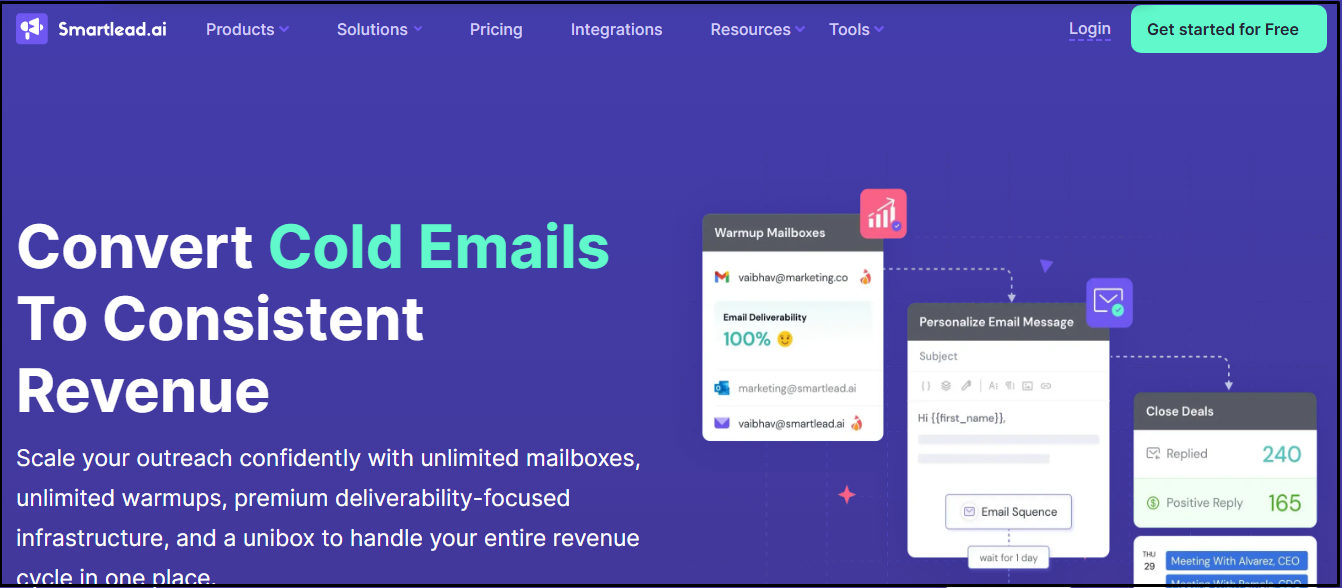
Smartlead provides structured personalization through variables and integrations. You can insert standard merge fields such as first name, company name, and role. You can also integrate external tools to enrich lead data before sending campaigns.
Smartlead supports dynamic personalization across sequences. You can tailor follow-ups based on steps, timing, and campaign logic. This gives you flexibility if you are running complex outbound systems across many inboxes.
However, most personalization in Smartlead depends on how well you prepare your lead data. The platform itself does not deeply interpret context. Instead, it executes based on the inputs you provide. This works well if you already have a strong data stack and clear processes.
Reachingly.ai:
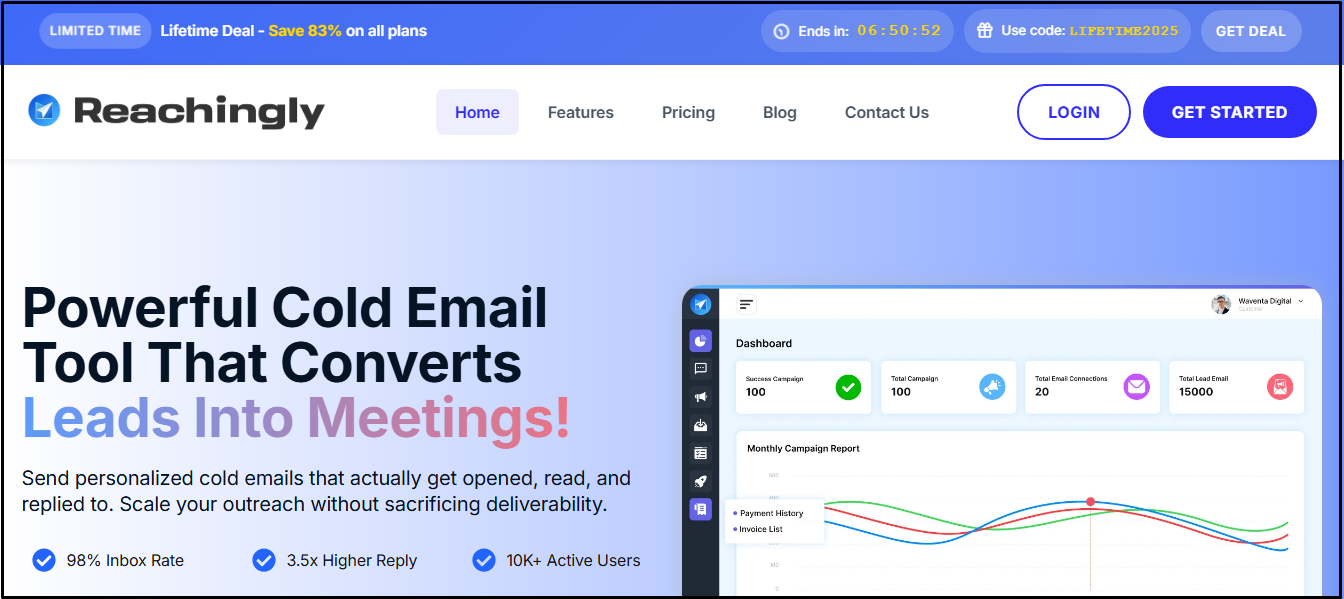
Reachingly.ai approaches personalization from a different angle. Instead of relying mainly on static variables, it emphasizes contextual relevance. You can personalize messages based on role, industry, and campaign intent.
Its AI-assisted personalization helps you craft email copy that adapts naturally to different prospect segments. You are not limited to surface-level merge tags. The platform encourages relevance in tone, structure, and messaging.
This makes it easier for you to launch campaigns that feel human without extensive setup. You spend less time fixing awkward phrasing and more time refining messaging that resonates.
Final verdict:
Both tools handle personalization effectively, but they serve different working styles. Smartlead gives you control if you want to engineer personalization from the ground up. Reachingly.ai helps you achieve relevance faster with less manual effort. If personalization quality is your top priority, both tools perform well in their own way.
Feature #2: Pricing Plans
Smartlead:
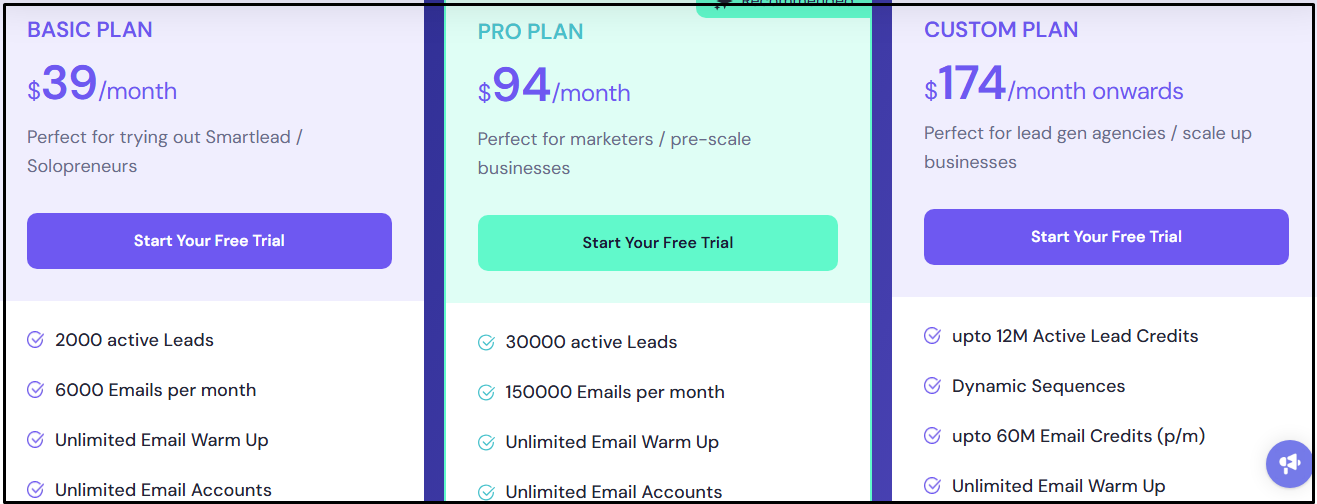
Smartlead uses a tier-based pricing model that starts at approximately $39 per month when billed annually. This entry plan includes core outreach features, inbox rotation, and warm-up.
As you scale, costs increase based on usage and advanced requirements. Agencies often pay additional fees for client management features. While pricing is transparent, total costs can rise as your operation grows.
Smartlead pricing makes sense if you are running large outbound systems and need infrastructure-level control. However, smaller teams may find the cost-to-feature balance less forgiving as they expand.
Reachingly.ai:
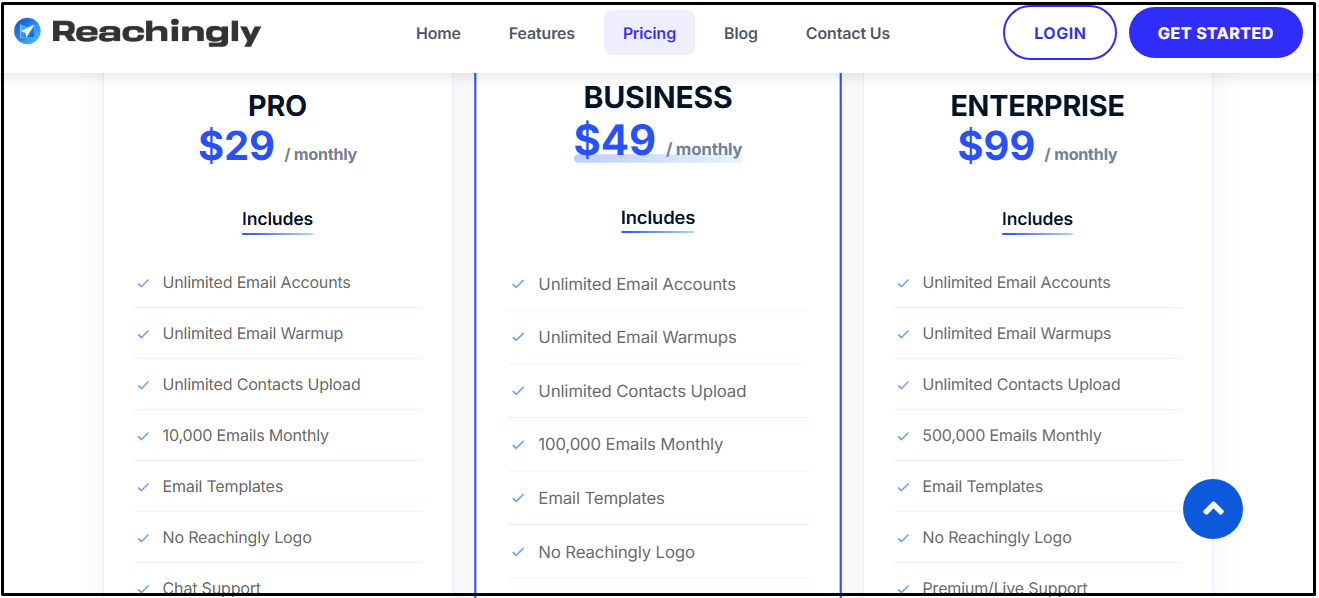
Reachingly.ai positions its pricing around accessibility and value. Its starting plan billed annually is typically lower than comparable tools, making it attractive for startups and agencies with tighter budgets.
Core features such as personalization, analytics, warm-up, and collaboration are included early. You do not need multiple add-ons to unlock essential functionality.
This pricing structure allows you to plan costs more predictably. You avoid paying extra just to access features that are fundamental to daily outreach.
Final Verdict:
When pricing is evaluated against feature access, Reachingly.ai emerges as the more budget-friendly option. You get essential outreach capabilities without stacking additional costs. For agencies and businesses managing expenses carefully, Reachingly.ai offers a more balanced entry point.
Feature #3: Advanced Analytics
Smartlead
Smartlead offers campaign-level analytics that help you track open rates, reply rates, and overall performance. You can analyze inbox health, sending behavior, and engagement trends across campaigns.
These insights are useful for diagnosing deliverability issues and optimizing send volumes. Smartlead analytics are functional and reliable, especially for teams focused on scale and infrastructure health.
However, insights are more operational than interpretive. You see what is happening, but you may need extra effort to understand why certain messages perform better than others.
Reachingly.ai
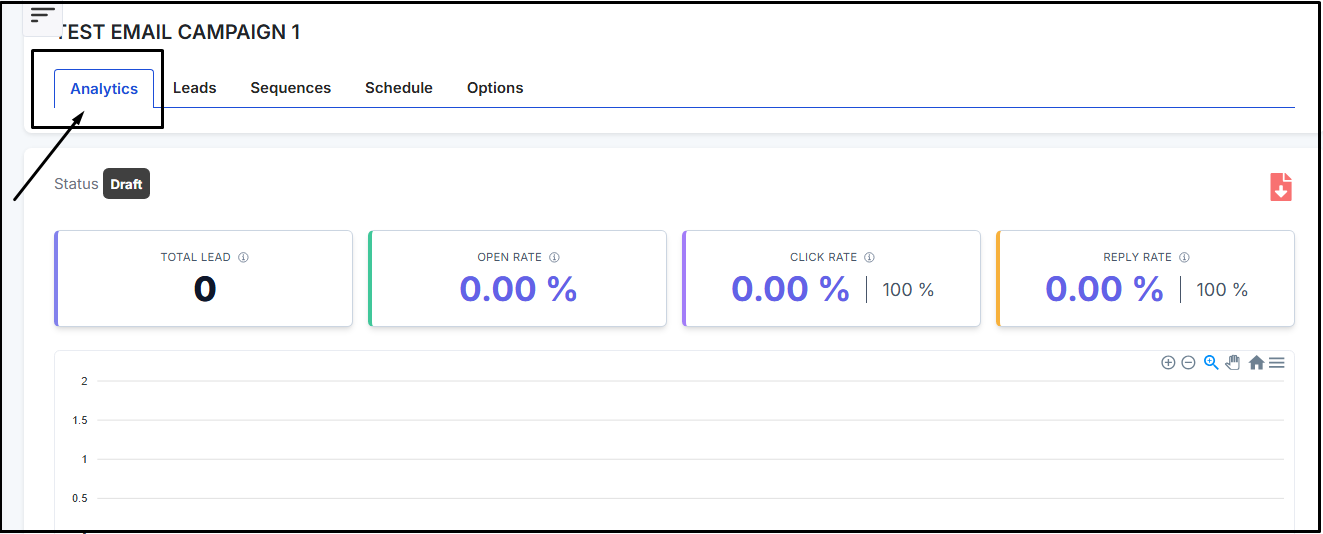
Reachingly.ai places stronger emphasis on clarity and usability in analytics. You can track opens, replies, and conversions in a way that highlights performance patterns rather than raw numbers.
Campaign-level insights are easier to interpret. You can quickly identify which messages, segments, or sequences drive better engagement. This helps you refine campaigns faster without exporting data or relying on external tools.
Analytics feel less technical and more actionable. You spend more time optimizing strategy and less time deciphering dashboards.
Final Verdict:
Reachingly.ai stands out for analytics that support decision-making, not just reporting. While Smartlead provides solid operational data, Reachingly.ai delivers insights that are easier to act on and refine.
Feature #4: Customer Support
Smartlead
Smartlead provides customer support through standard channels such as email and help documentation. Over time, support quality has improved, and many issues are eventually resolved.
That said, response times can vary. In some cases, you may wait up to 24 hours for a reply. For teams running time-sensitive campaigns, this delay can slow down troubleshooting.
Support is helpful when it arrives, but it may not always match the urgency of active outbound operations.
Reachingly.ai
Reachingly.ai is known for faster response times and direct resolution. Support interactions feel more hands-on, especially for onboarding and campaign setup questions.
You receive guidance that focuses on solving the issue rather than redirecting you through documentation. This is particularly valuable if you are running campaigns that require quick adjustments.
The support experience feels more aligned with the pace of outbound work, where delays can impact results.
Final Verdict:
Both tools offer customer support, but responsiveness makes a difference. Reachingly.ai clearly performs better when speed and clarity matter. If you value quick problem resolution during active campaigns, Reachingly.ai is the stronger option.
Feature #5: Team Collaboration
Smartlead
Smartlead supports team workflows through shared access and client-level management. Agencies can manage multiple campaigns and inboxes under one system.
This structure works well if you operate with defined roles and processes. You can separate campaigns and maintain visibility across accounts.
However, collaboration can feel technical. Team members may require onboarding to navigate the interface efficiently.
Reachingly.ai
Reachingly.ai focuses on simplicity in collaboration. Shared dashboards and campaign visibility make it easier for teams to stay aligned.
You can collaborate without navigating complex hierarchies. This makes onboarding smoother and reduces friction between team members.
The platform feels more intuitive for teams that want to move quickly without deep technical setup.
Final verdict:
Both tools support team collaboration effectively. Reachingly.ai becomes more desirable when ease of use and fast onboarding are important. It simplifies teamwork without sacrificing control.
Feature #6: Email Warm-up & Deliverability
Smartlead
Smartlead is widely recognized for its deliverability infrastructure. It offers inbox rotation, warm-up automation, and domain health management.
These features help you protect sender reputation while scaling campaigns. Smartlead gives you granular control over sending behavior, which is valuable for high-volume outreach.
Deliverability tools are powerful but may require experience to configure optimally.
Reachingly.ai
Reachingly.ai integrates warm-up and deliverability controls in a more guided way. You still benefit from inbox protection and sending limits, but with less manual tuning.
The platform emphasizes consistency and stability. You are less likely to over-optimize and accidentally harm deliverability.
This approach works well for teams that want reliable inbox placement without managing every technical detail.
Final verdict:
Reachingly.ai wins by making deliverability easier to maintain consistently. While Smartlead offers strong infrastructure, Reachingly.ai balances protection with simplicity, reducing risk for everyday users.
Conclusion
Choosing between Smartlead and Reachingly depends on how you work. Smartlead excels when you need infrastructure-level control and large-scale outbound systems. Reachingly.ai shines when you prioritize clarity, affordability, and message quality.
If you want cleaner analytics, faster support, and accessible pricing, Reachingly.ai becomes a logical choice. It does not replace discipline or strategy, but it removes friction from execution. For teams focused on meaningful conversations rather than raw volume, Reachingly.ai offers a compelling and practical solution.
Smartlead vs Reachingly FAQs
Is Smartlead or Reachingly better for cold email outreach?
Both tools support cold email outreach, but they focus on different strengths. Smartlead suits high-volume sending and inbox rotation. Reachingly fits teams that prioritize message relevance, clearer analytics, and stable deliverability for long-term campaigns.
How does Reachingly.ai improve email personalization?
Reachingly.ai uses AI-driven contextual personalization. You tailor messages by role, industry, and intent instead of only merge tags. This helps your emails sound more natural and relevant, which can increase reply rates without heavy manual editing.
Does Smartlead support email warm-up and deliverability protection?
Yes. Smartlead includes built-in warm-up, inbox rotation, and sending limits. These features help protect sender reputation when running large campaigns, especially if you manage multiple domains and inboxes at scale.
Is Reachingly.ai suitable for small teams and agencies?
Reachingly.ai works well for small teams and agencies. Its pricing is more accessible, collaboration is simple, and core features are available early. You can run campaigns efficiently without managing complex configurations or multiple paid add-ons.
Which tool is more affordable when billed annually?
Reachingly.ai is generally more affordable at the entry level when billed annually. Smartlead starts around $33 per month, but costs can rise as usage grows. Reachingly includes essential features earlier, making budgeting more predictable.
Can Smartlead handle team collaboration and shared campaigns?
Smartlead supports team access, shared campaigns, and agency-style workspaces. You can manage multiple inboxes and clients under one system, though new users may need onboarding to navigate the interface efficiently.
How fast is Reachingly.ai customer support?
Reachingly.ai is known for faster response times and quicker issue resolution. This helps you make adjustments during live campaigns without long delays, which is useful when deliverability or campaign timing matters.
Does Reachingly.ai offer advanced analytics for cold email campaigns?
Yes. Reachingly.ai provides campaign-level analytics focused on clarity. You can easily see what messages and segments perform best, helping you optimize outreach faster without exporting data or using external reporting tools.
Is Smartlead better for high-volume cold email sending?
Smartlead is often chosen for high-volume outreach. Its inbox rotation and deliverability controls are designed for scale. If your strategy depends on sending large volumes across many inboxes, Smartlead offers strong infrastructure.
Can Reachingly.ai replace multiple outreach tools?
Reachingly.ai can reduce tool overload by combining personalization, analytics, warm-up, and collaboration in one platform. You spend less time switching tools and more time refining campaigns that drive replies.
Which tool is easier to use for beginners?
Reachingly.ai is generally easier for beginners. Its interface is simpler, personalization is guided, and analytics are easier to interpret. Smartlead offers more control but may feel technical for users new to cold email outreach.
